Asia Population Pyramid 2071

Asia
2071
Population: 5,160,113,561

Year

-5 -1   2071  +1 +5

Country

A B C D E F G H I J K L M N O P Q R S T U V W Y Z
Embed this population pyramid ×

Copy the code below and paste it into your website or LMS.

Asia in 2071

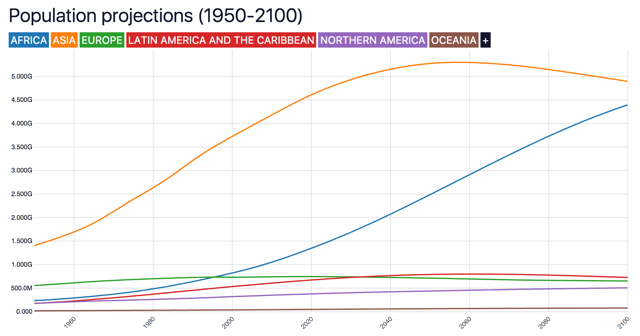
By 2071, the population of Asia is expected to reach 5,160,113,562. That would be 1.9% less than in 2061 (5,260,047,768).

The median age is projected at 45.2 years, with 25.3 children under 15 and 40.9 people aged 65 or over for every 100 people of working age (15–64). The pyramid is constrictive: cohorts of children are smaller than those of their parents, reflecting low fertility and an ageing population.

Share of the population by age group, 1950–2100

Data source: United Nations World Population Prospects, 2024 revision (medium variant) — last updated July 2024.

Population
5,160,113,562
Median age
45.2
0-14 %
15.2%
65+ %
24.6%
Child dependency
25.3
Old-age dependency
40.9
Pyramid shape
Births per woman

The World Bank does not publish this indicator for regions or continents.

Life expectancy at birth

The World Bank does not publish this indicator for regions or continents.

People supported per 100 workers
Dependency ratios, 1950–2100
Children Older adults
20406080
19502100
Where immigrants come from (2024)

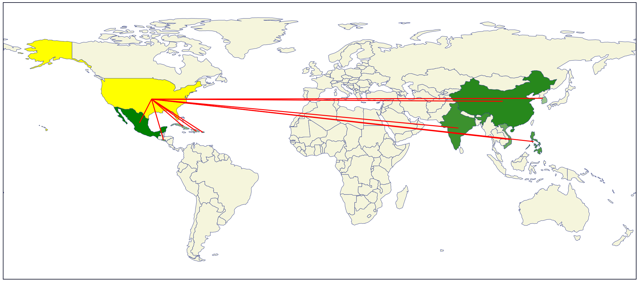
87,148,971 immigrants live in Asia.

India11,191,140
Bangladesh7,623,477
Syrian Arab Republic6,847,008
Afghanistan6,236,047
China6,129,789
Where emigrants live (2024)

120,763,610 people born in Asia live in other countries.

United States of America14,986,309
Saudi Arabia10,771,775
United Arab Emirates6,794,566
Turkey5,315,680
Germany4,744,443
Explore
Immigration statistics

Source: United Nations International Migrant Stock 2024.

How many people are projected to live in Asia in 2071?
UN projections put Asia's population at 5,160,113,562 in 2071.
How old is the population of Asia?
Asia's median age is 45.2 years.
What share of Asia's population is over 65 or under 15?
24.6% of Asia's population is 65 or older, and 15.2% is under 15.
What type of population pyramid does Asia have?
Asia's pyramid is constrictive — narrower at the base than the middle, the signature of sustained low fertility and population ageing.

Check our other visualizations