Brazil Population Pyramid 1964
Brazil in 1964
The population of Brazil in 1964 was 81,488,594. A decade earlier, in 1954, the population was 60,235,122; it has grown by 35.3% since.
With a median age of 17.8 years, Brazil had a youth dependency ratio of 83.9 and an old-age dependency ratio of 5.0 per 100 people of working age. The pyramid is expansive: its wide base of young cohorts reflects high fertility and a rapidly growing population.
Data source: United Nations World Population Prospects, 2024 revision (medium variant) — last updated July 2024.
The fertility rate of Brazil was 1.62 births per woman in 2023, under the 2.1 needed to replace each generation.
Source: World Bank World Development Indicators, latest available year.
A child born there in 2023 could expect to live 75.8 years on average (79.0 years for girls, 72.8 for boys).
Source: World Bank World Development Indicators, latest available year.
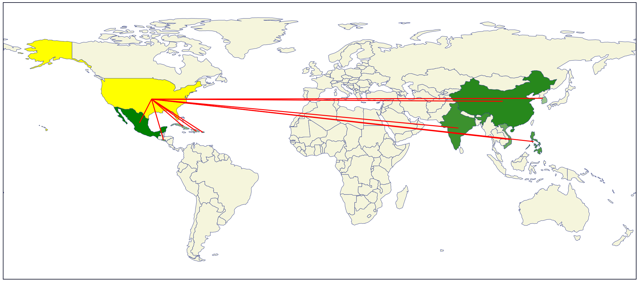
1,387,343 immigrants live in Brazil, 0.7% of the population.
| Venezuela | 571,919 |
| Portugal | 146,697 |
| Haiti | 88,383 |
| Paraguay | 53,941 |
| Japan | 52,758 |
2,193,956 people born in Brazil live in other countries.
| United States of America | 738,994 |
| Japan | 207,220 |
| Spain | 179,946 |
| Portugal | 173,266 |
| Italy | 137,935 |
Source: United Nations International Migrant Stock 2024.
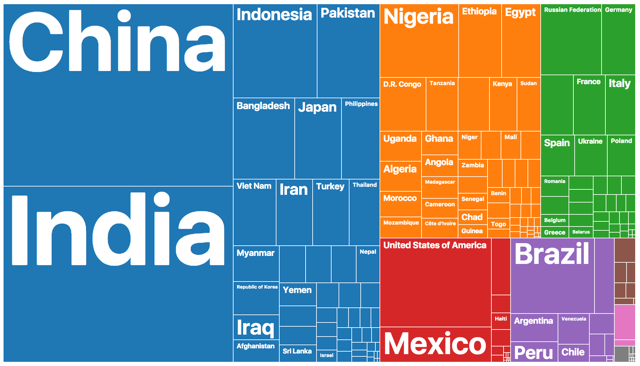
| Country | Population | Median age | Relative size |
|---|---|---|---|
| Brazil | 81,488,595 | 17.8 | |
| Argentina | 21,769,454 | 26.7 | |
| Colombia | 17,637,411 | 16.3 | |
| Peru | 11,427,978 | 17.9 | |
| Venezuela | 9,377,712 | 16.5 |