Bulgaria Population Pyramid 2071
Bulgaria in 2071
In 2071, Bulgaria is projected to have a population of 4,420,782 people. That would be 9.4% less than in 2061 (4,878,500).
Half of the population would be younger than 48.9 years, with 13.5% children under 15 and 29.5% aged 65 or older. The pyramid is constrictive: cohorts of children are smaller than those of their parents, reflecting low fertility and an ageing population.
Data source: United Nations World Population Prospects, 2024 revision (medium variant) — last updated July 2024.
In 2023 women in Bulgaria had on average 1.81 children, below the replacement level of 2.1.
Source: World Bank World Development Indicators, latest available year.
Life expectancy at birth was 75.7 years in 2023: 79.6 for women and 72.0 for men.
Source: World Bank World Development Indicators, latest available year.
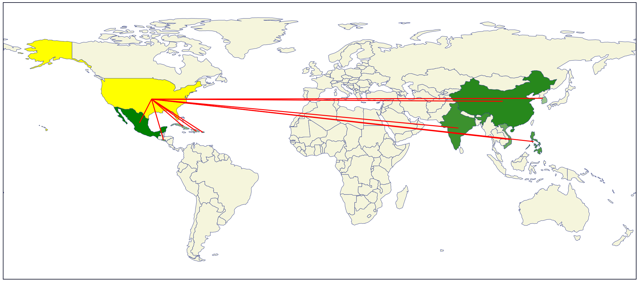
298,157 immigrants live in Bulgaria, 4.4% of the population.
| Ukraine | 61,074 |
| Russian Federation | 45,089 |
| Syrian Arab Republic | 24,543 |
| Turkey | 19,877 |
| Germany | 17,311 |
1,252,123 people born in Bulgaria live in other countries.
| Turkey | 348,052 |
| Germany | 338,439 |
| Spain | 103,587 |
| Greece | 78,992 |
| Netherlands | 58,481 |
Source: United Nations International Migrant Stock 2024.
| Country | Population | Median age | Relative size |
|---|---|---|---|
| Bulgaria | 4,420,782 | 48.9 | |
| Slovakia | 4,234,289 | 51.4 | |
| Belarus | 5,977,050 | 53.7 | |
| Republic of Moldova | 1,906,952 | 46.4 | |
| Hungary | 8,010,393 | 46.9 |