Malta Population Pyramid 2071
Malta in 2071
United Nations projections (medium variant) put the population of Malta at 476,649 in 2071. That would be 6.7% less than in 2061 (510,685).
With a projected median age of 57.0 years, Malta would have a youth dependency ratio of 18.7 and an old-age dependency ratio of 80.7 per 100 people of working age. This is a constrictive pyramid — its base is narrower than its middle, the signature of sustained low birth rates and population ageing.
Data source: United Nations World Population Prospects, 2024 revision (medium variant) — last updated July 2024.
The fertility rate of Malta was 1.06 births per woman in 2023, under the 2.1 needed to replace each generation.
Source: World Bank World Development Indicators, latest available year.
A child born there in 2023 could expect to live 83.5 years on average (85.3 years for girls, 81.8 for boys).
Source: World Bank World Development Indicators, latest available year.
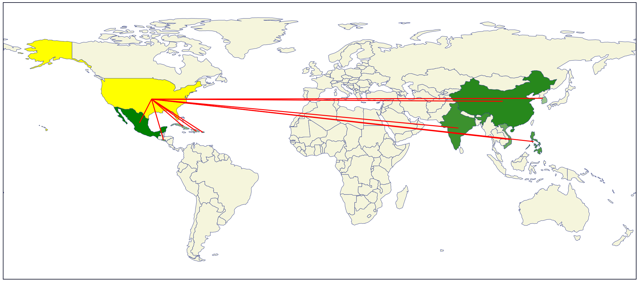
190,447 immigrants live in Malta, 35.3% of the population.
| United Kingdom | 54,739 |
| Australia | 22,753 |
| Canada | 9,242 |
| Italy | 8,204 |
| Somalia | 7,128 |
43,937 people born in Malta live in other countries.
| Australia | 34,451 |
| Canada | 5,795 |
| Italy | 2,127 |
| Luxembourg | 282 |
| Bulgaria | 227 |
Source: United Nations International Migrant Stock 2024.
| Country | Population | Median age | Relative size |
|---|---|---|---|
| Malta | 476,649 | 57.0 | |
| Montenegro | 440,041 | 50.2 | |
| TFYR Macedonia | 1,212,946 | 53.1 | |
| Albania | 1,781,410 | 58.3 | |
| Slovenia | 1,787,912 | 49.3 |