Nepal Population Pyramid 2005
Nepal in 2005
As of 2005, Nepal counted 26,309,458 inhabitants. A decade earlier, in 1995, the population was 22,245,439; it has grown by 18.3% since.
Half of the population was younger than 20.0 years; 39.2% were children under 15 and 4.1% were 65 or older. The pyramid is expansive: its wide base of young cohorts reflects high fertility and a rapidly growing population.
Data source: United Nations World Population Prospects, 2024 revision (medium variant) — last updated July 2024.
In 2023 women in Nepal had on average 1.98 children, below the replacement level of 2.1.
Source: World Bank World Development Indicators, latest available year.
A child born there in 2023 could expect to live 70.4 years on average (71.8 years for girls, 68.8 for boys).
Source: World Bank World Development Indicators, latest available year.
458,924 immigrants live in Nepal, 1.5% of the population.
| India | 412,190 |
| Bhutan | 26,552 |
| China | 18,757 |
| Pakistan | 1,170 |
| Bangladesh | 214 |
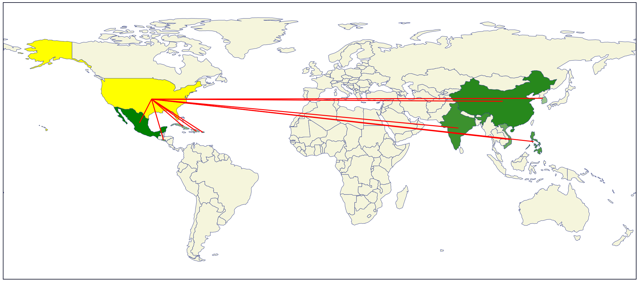
2,637,069 people born in Nepal live in other countries.
| India | 663,518 |
| Malaysia | 502,596 |
| Saudi Arabia | 297,561 |
| Qatar | 266,580 |
| United States of America | 264,317 |
Source: United Nations International Migrant Stock 2024.
| Country | Population | Median age | Relative size |
|---|---|---|---|
| Nepal | 26,309,458 | 20.0 | |
| Afghanistan | 24,404,567 | 15.0 | |
| Sri Lanka | 20,216,525 | 28.8 | |
| Bhutan | 661,866 | 22.2 | |
| Maldives | 306,429 | 21.5 |