Singapore Population Pyramid 2071
Year
2071Singapore in 2071
In 2071, Singapore is projected to have a population of 5,600,253 people. Compared with 2061, when the projection stands at 5,878,372, that represents a decline of 4.7% over ten years.
Half of the population would be younger than 59.2 years, with 9.5% children under 15 and 43.9% aged 65 or older. The pyramid is constrictive: cohorts of children are smaller than those of their parents, reflecting low fertility and an ageing population.
Data source: United Nations World Population Prospects, 2024 revision (medium variant) — last updated July 2024.
In 2023 women in Singapore had on average 0.97 children, below the replacement level of 2.1.
Source: World Bank World Development Indicators, latest available year.
A child born there in 2023 could expect to live 82.9 years on average (85.2 years for girls, 80.7 for boys).
Source: World Bank World Development Indicators, latest available year.
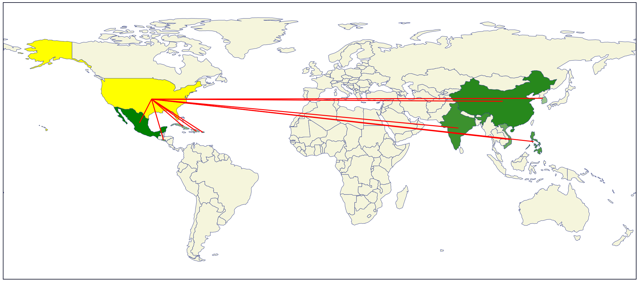
2,709,692 immigrants live in Singapore, 46.5% of the population.
| Malaysia | 1,553,249 |
| China | 533,745 |
| India | 377,038 |
| Indonesia | 180,437 |
| United States of America | 26,705 |
269,604 people born in Singapore live in other countries.
| Malaysia | 79,926 |
| Australia | 68,087 |
| United Kingdom | 45,936 |
| Bangladesh | 12,909 |
| Canada | 12,878 |
Source: United Nations International Migrant Stock 2024.
| Country | Population | Median age | Relative size |
|---|---|---|---|
| Singapore | 5,600,253 | 59.2 | |
| Timor-Leste | 2,082,758 | 38.9 | |
| Laos | 10,153,551 | 40.3 | |
| Brunei Darussalam | 509,607 | 45.7 | |
| Cambodia | 23,317,468 | 38.3 |